Kai Werner · 2 September 2026
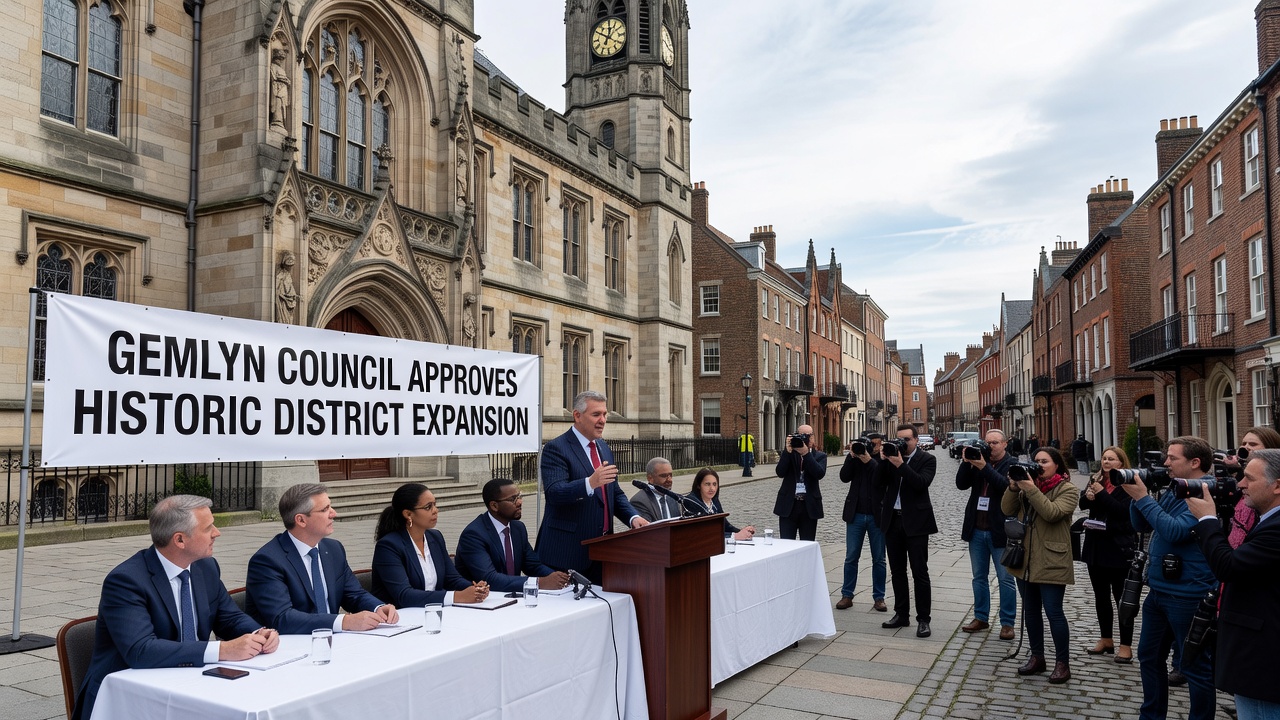
The Gemlyn Council convened in its chambers on Tuesday evening to consider a proposal for expanding the boundaries of the historic district. The session drew a large crowd of residents, preservation advocates, and business representatives. After extensive debate, the council voted 5 to 4 in favor of the expansion, marking a significant step in the city's efforts to safeguard its cultural heritage.
The proposal aims to include additional neighborhoods that contain buildings of architectural and historical importance. Proponents highlighted the need to prevent inappropriate development that could erode the character of these areas. Opponents raised concerns about property rights and potential economic burdens on owners.
Scope and Rationale Behind the Expansion
Under the approved plan, the historic district will grow by approximately 20 percent, incorporating parts of the old mill district and adjacent residential streets. These areas feature examples of Victorian and Art Deco architecture that are rare in the region. The rationale provided by the planning department underscores the cultural value these structures hold for future generations. Studies conducted over the past two years identified these locations as critical to maintaining Gemlyn's distinct identity. The expansion will also facilitate access to federal grants for restoration projects. Councilors noted that similar expansions in neighboring cities have led to increased property values without stifling growth.
Furthermore, the new regulations will enforce guidelines on signage, landscaping, and exterior modifications to ensure consistency with historical standards. Educational programs will be rolled out to inform property owners about best practices in maintenance and restoration.
Reactions from the Community and Future Outlook
Community members voiced their opinions both during the meeting and in subsequent interviews. Preservation groups celebrated the outcome as a victory for heritage conservation, pointing to the potential for enhanced tourism. Local businesses anticipate benefits from visitors drawn to the authentic atmosphere. However, some residents expressed apprehension regarding the limitations on personal property modifications. The council has promised to provide support through advisory services and financial assistance programs. Looking ahead, the implementation phase will involve collaboration with architects specializing in historic preservation. This vote underscores the council's dedication to fostering a community that values its past while planning for sustainable development. Overall, the decision is expected to shape Gemlyn's landscape for decades to come, reinforcing its reputation as a hub of heritage and culture.