Kai Werner · 18 September 2026
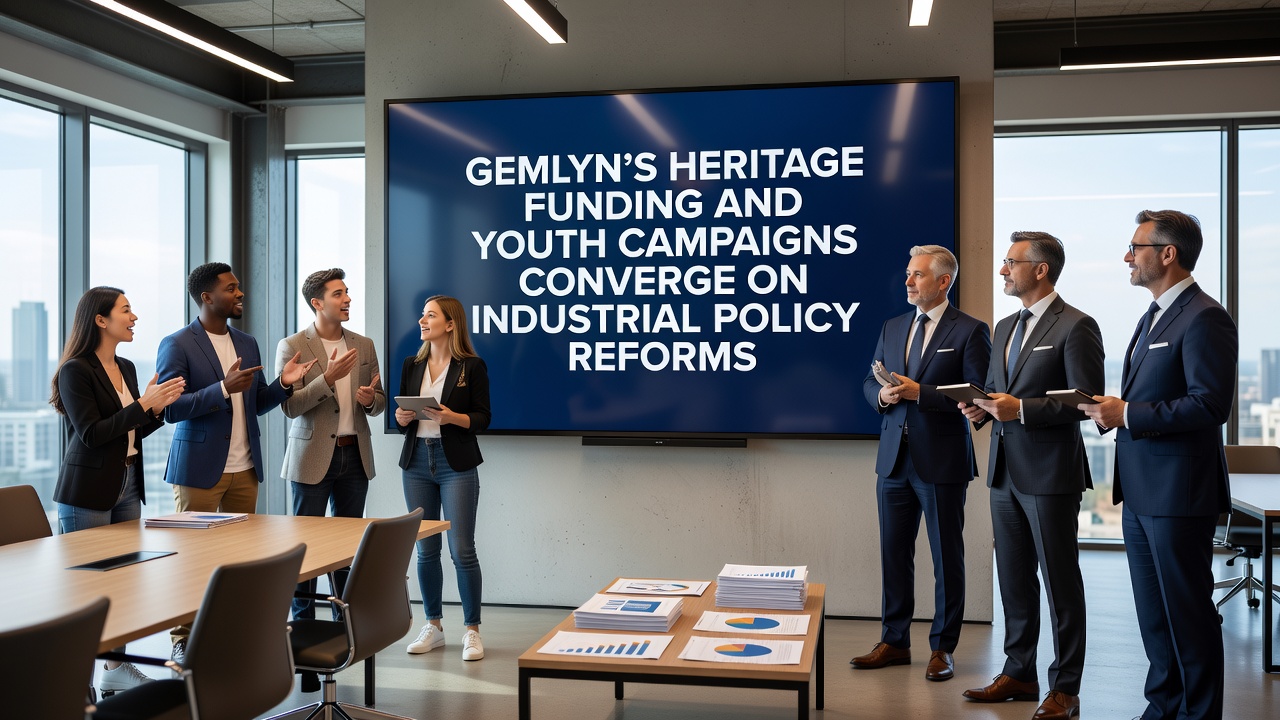
Gemlyn's Heritage Funding and Youth Campaigns Converge on Industrial Policy Reforms
Heritage funding allocations in Gemlyn have started to align with youth advocacy efforts focused on industrial policy adjustments, and observers note that this alignment has produced coordinated initiatives aimed at integrating cultural preservation requirements into manufacturing and production frameworks. Data from regional economic reports indicate that combined budgets for heritage projects reached significant levels in the preceding fiscal year, while youth organizations have documented over 200 public submissions on policy drafts since early 2025. Researchers from multiple institutions have tracked how these streams now feed into the same legislative review cycles.
Heritage Funding Mechanisms and Their Scope
Funding streams dedicated to historic sites and cultural assets operate through established grant structures that require compliance with environmental standards, and these standards increasingly overlap with rules governing industrial zones. Government records show that allocations have supported restoration work at fifteen designated locations while mandating energy efficiency upgrades that mirror targets set for nearby factories. Those who administer the programs report that applicants must now submit joint assessments covering both heritage value and projected industrial impact before receiving final approval.
Youth Campaigns and Policy Engagement
Youth groups have organized petitions and workshops that emphasize the need for industrial policies to account for long-term community heritage, and their materials cite specific examples of past factory expansions that affected protected areas. Participation figures from the most recent round of consultations reached 1,400 individuals across age brackets under thirty, according to organizer summaries. These campaigns have submitted detailed proposals that call for phased implementation schedules, and several of those proposals now appear in draft regulatory texts under consideration.

Convergence Points in September 2026
Scheduled review sessions set for September 2026 will examine how heritage criteria can be embedded directly into industrial permitting processes, and planning documents indicate that joint working groups will present consolidated recommendations at that time. Analysts have identified three key policy areas where overlap occurs: land-use zoning that protects both historic districts adn new production facilities, emissions thresholds that apply equally to restoration projects and manufacturing operations, and workforce training programs that incorporate skills from traditional building trades. European Commission updates on sustainable industry strategies provide context for these local measures, and similar approaches appear in documentation from the Australian Department of Industry, Science and Resources.
Documented Examples and Data Trends
One documented case involves a former textile mill site where heritage grants financed structural repairs while an adjacent industrial facility adopted matching insulation standards, and project timelines show completion within eighteen months. Figures released by regional planning offices reveal that such combined projects have reduced average approval times by twenty-two percent compared with separate applications. Additional studies from academic centers have measured changes in local employment, noting that heritage-related construction roles increased by twelve percent in areas where youth-proposed reforms were adopted early. OECD industrial policy reviews offer comparative benchmarks that local officials reference when evaluating outcomes.
Implementation Pathways and Regulatory Adjustments
Policy drafts under discussion propose that industrial permits include mandatory heritage impact statements, and youth campaign materials have supplied templates that simplify data collection for these statements. Regulatory bodies have tested pilot versions in two districts, and results indicate improved coordination between preservation agencies and economic development offices. Those overseeing the pilots report that applicants now receive single-point guidance rather than navigating separate offices, and this adjustment has produced measurable reductions in administrative duplication. Further refinements scheduled for late 2026 aim to extend these streamlined procedures across additional sectors.
Conclusion
Heritage funding streams and youth advocacy efforts continue to shape industrial policy discussions through shared data requirements and joint review processes. Records indicate that the September 2026 sessions will formalize several of the integrated approaches already tested in pilot districts, and ongoing documentation from participating organizations will track resulting adjustments in both preservation outcomes and production standards.